
Who Will Pay GST in India? | Explained by GST Suvidha Online
The Goods and Services Tax (GST) has transformed India’s indirect taxation system into a unified structure. One of the most common questions business owners and individuals ask is:
👉 “Who will pay GST in India?”
At GST Suvidha Online, we simplify GST compliance and help you understand whether you are liable to pay GST, how it applies to your business, and the exceptions under the law.
Understanding GST in India
GST is a destination-based tax levied on the supply of goods and services. It has replaced multiple taxes like VAT, excise duty, and service tax, creating a single tax system across India.
GST is payable at every stage of the supply chain but can be claimed back as Input Tax Credit (ITC), ensuring the final consumer bears the ultimate tax burden.
Who Will Pay GST in India? – Primary Liable Parties
1. Businesses Crossing the Threshold
- Businesses with aggregate turnover > ₹40 lakh (goods) or ₹20 lakh (services) must register and pay GST.
- For special category states (North-Eastern, Himachal Pradesh, etc.), the threshold is ₹20 lakh for goods and ₹10 lakh for services.
2. E-commerce Sellers
Anyone selling through e-commerce platforms like Amazon, Flipkart, or Myntra must register and pay GST, regardless of turnover.
3. Casual Taxable Persons & Non-Resident Taxpayers
- Casual taxable persons (temporary business at exhibitions, fairs) must pay GST.
- Non-resident taxable persons supplying goods/services in India must also comply.
4. Reverse Charge Mechanism (RCM)
In some cases, the recipient of goods/services pays GST instead of the supplier.
For example:
- Services from a lawyer or transporter.
- Imports of goods or services.
5. Online Service Providers
Foreign companies offering online services (like apps, streaming, SaaS) to Indian consumers must pay GST.
Table: Who Will Pay GST in India?
|
Category |
GST Liability |
|
Turnover > Threshold |
Yes, compulsory registration and GST payment |
|
E-commerce Sellers |
Yes, mandatory regardless of turnover |
|
Casual/Non-Resident Taxpayers |
Yes, registration and advance tax required |
|
Reverse Charge Recipients |
Yes, recipient pays GST instead of supplier |
|
Importers of Goods/Services |
Yes, GST applies as IGST on imports |
|
Online Foreign Service Providers |
Yes, must pay GST on digital services to Indian users |
Graph: GST Liability Across Different Groups
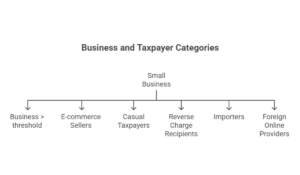
This graph shows that while smaller businesses may be exempt, larger businesses, e-commerce sellers, and importers are significant GST contributors.
Who Is Exempt from Paying GST?
Not everyone needs to pay GST in India. Exempt categories include:
- Small businesses below threshold turnover.
- Agricultural income and farmers (supply of raw produce).
- Certain goods/services such as:
- Fresh fruits, vegetables, milk.
- Educational services.
- Healthcare services.
- Fresh fruits, vegetables, milk.
Special Cases in GST Payment
Composition Scheme
Small taxpayers with turnover up to ₹1.5 crore (₹75 lakh for North-Eastern states) can opt for the Composition Scheme, paying GST at a fixed nominal rate (1%–6%) without ITC benefits.
|
Taxpayer Type |
GST Rate Under Composition Scheme |
|
Manufacturers |
1% |
|
Restaurants (not liquor) |
5% |
|
Traders |
1% |
|
Service Providers |
6% |
Reverse Charge Examples
|
Service/Goods Supplied |
GST Paid By |
|
Transport by Goods Transport Agency |
Recipient |
|
Legal Services by Advocates |
Recipient |
|
Imports of Services |
Recipient |
Importance of Paying GST
- Legal Compliance – Non-compliance leads to penalties up to 10% of the tax due.
- Business Growth – Registration builds credibility and enables interstate trade.
- Input Tax Credit – Helps businesses reduce tax burden by claiming credits.
- Nationwide Reach – GST registration is required to sell online or across states.
Example Case Study: Who Pays GST?
Case 1:
- A retail trader in Delhi with turnover of ₹15 lakh.
- ✅ Not required to pay GST (below threshold).
Case 2:
- An e-commerce seller on Amazon with ₹8 lakh turnover.
- ❌ Must pay GST (e-commerce sellers have no threshold exemption).
Case 3:
- A software company in Bengaluru with ₹50 lakh turnover.
- ✅ Must pay GST on services provided.
GST Suvidha Online – How We Help You
At GST Suvidha Online, we make GST compliance stress-free:
- Registration – Hassle-free online GST registration.
- Return Filing – Accurate and timely filing of GSTR-1, 3B, 9, etc.
- Advisory Services – Guidance on thresholds, exemptions, and composition scheme.
- Automation – Simplified invoice upload, reconciliation, and return preparation.
- RCM & Import Guidance – Specialized support for reverse charge and import GST.
Quick Recap – Who Will Pay GST in India?
|
Liable To Pay GST |
Not Liable To Pay GST |
|
Businesses above turnover limit |
Small businesses below threshold |
|
E-commerce sellers |
Farmers selling agricultural produce |
|
Importers |
Healthcare & education providers |
|
Casual/non-resident taxpayers |
Exempt goods & services |
|
Reverse charge recipients |
Conclusion
The answer to “Who will pay GST in India?” depends on business size, nature of goods/services, and transaction type. While small businesses and exempt sectors are spared, most enterprises, e-commerce sellers, importers, and professionals must comply.
At GST Suvidha Online, we guide you through every step—ensuring you know whether you’re liable and helping you stay compliant without hassle.
📢 Call to Action
Still unsure whether you need to pay GST? Let the experts handle it for you.
👉 Visit www.gstsuvidhaonline.com and simplify your GST journey with trusted experts today!